Digital government is often discussed through the language of efficiency, convenience, and innovation. But behind every digital public service is a much deeper question: can people truly trust the systems they depend on?
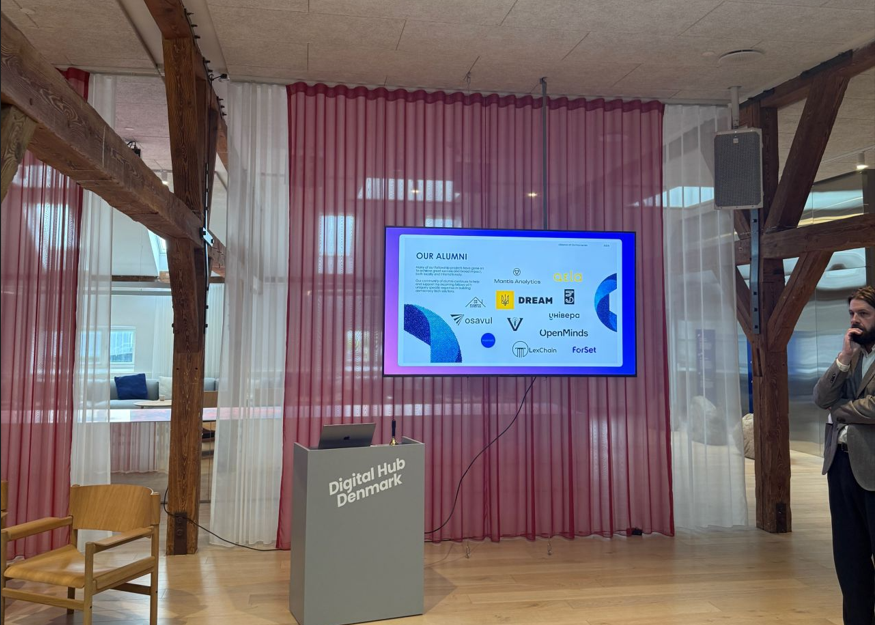
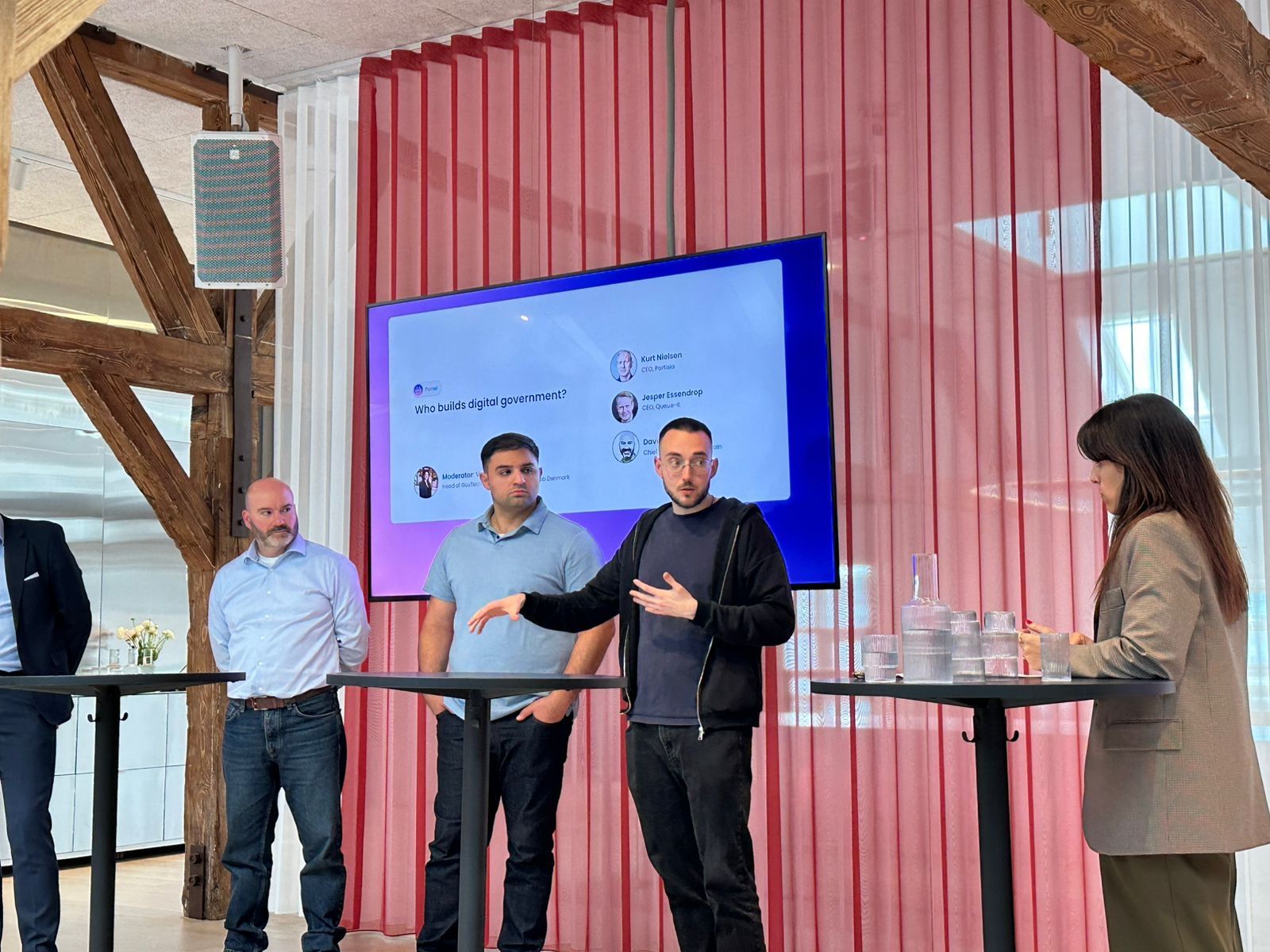
Last week, I had the pleasure of joining the “Who Builds Digital Government?” panel at Democracy Tech in Action: Innovation, Trust & Resilience, hosted by Digital Hub Denmark in collaboration with the Alliance of Democracies Foundation. The discussion brought together experts working across technology, democracy, policy, and digital infrastructure to explore what trustworthy digital government should actually look like in practice.
I was honored to share the stage with Vanessa Lista, Jesper Essendrop, David Cotterill, Kurt Nielsen, and Vahan Martirosyan. It was also valuable to hear perspectives from Anne Marie Engtoft Meldgaard, Ulrik Vestergaard Knudsen, Jonas Parello-Plesner, and Jakob Lindmark Frier, who contributed important insights on democratic resilience, trust, and cognitive threats.
Trust cannot be treated as a feature
One of the strongest themes of the panel was that trust cannot simply be added to a digital system at the end of the development process. It has to be built into the product itself.
That means asking difficult questions from the beginning: What happens when users do not automatically trust the system? How transparent should a digital platform be about how it works? How much information should citizens receive about the way their data is collected, processed, and protected? What happens when trust is broken? And perhaps most importantly: can citizens trust systems they do not understand?
These are not only technical questions. They are questions about legitimacy, accountability, and responsibility.
Digital government is democratic infrastructure
Public digital platforms increasingly shape how people access services, interact with institutions, verify their identity, receive information, and participate in public life. That means the people building these systems are not simply developing software. They are helping build part of the infrastructure of democracy itself.
A poorly designed system can create confusion, reduce transparency, or weaken trust. A secure and accountable system can do the opposite: make institutions more accessible, resilient, and credible.
This is why cybersecurity must be part of digital government from the very beginning — not only to protect systems from attack, but also to protect the trust that surrounds them.
What does trust look like at the product level?
During the panel, we explored what trust means in practical product terms. Trust can come from transparency, clear communication, strong cybersecurity, understandable privacy controls, responsible data use, and accountability when something goes wrong.
There is always a tension between speed and responsibility. Digital services are expected to be simple, fast, and seamless, but convenience should never remove accountability.
A system may be easy to use and still fail if people do not understand what happens to their data, who is responsible for decisions, or how they can challenge mistakes. The best digital public infrastructure has to achieve both: simplicity for the user and accountability behind the system.
The Ukrainian perspective
As CEO of Sec-TA, I was invited to bring a cybersecurity and Ukrainian perspective to the discussion. Ukraine has accumulated unique experience in building and maintaining digital systems in an environment where resilience, speed, and security are critical.
That experience makes one lesson especially clear: trust cannot depend on ideal conditions. Digital systems have to remain reliable under pressure. They need to be secure, adaptable, transparent, and understandable. They also need to maintain public confidence while evolving quickly.
This is relevant far beyond Ukraine. Every democracy building digital government will eventually face the same fundamental challenge: how to innovate quickly without compromising security, legitimacy, or public trust.
Different countries, shared questions
One of the most valuable parts of the event was hearing how Denmark approaches similar challenges from a very different context. The technologies may differ, the institutions may differ, and the level of digital maturity may differ, but many of the core questions remain the same.
How much should citizens understand about the systems they use? How do governments communicate risk? How do we build accountability into automated systems? How do we prevent convenience from becoming opacity? And how do we make sure technology strengthens democratic institutions rather than distancing people from them?
These are questions that no single country can solve alone. They require collaboration between governments, technology companies, cybersecurity experts, researchers, founders, and civil society.
Who builds digital government?
The answer is not just engineers, governments, or technology companies. Digital government is built by everyone who shapes its architecture, security, rules, interfaces, accountability mechanisms, and relationship with citizens.
That includes developers, cybersecurity professionals, policymakers, designers, researchers, founders, public servants, and the citizens who ultimately use these systems. And with that role comes responsibility.
Because the goal is not simply to build digital government. The goal is to build digital government people can trust — trust that is earned through transparency, protected through cybersecurity, able to survive pressure, and strong enough to support democratic institutions.
A big thank you to Digital Hub Denmark and the Alliance of Democracies Foundation for creating a space for this conversation and bringing together people working on the future of trusted digital infrastructure.
At Sec-TA, we believe secure technology and democratic resilience are increasingly part of the same challenge. And building trust into digital systems is one of the most important places to start. 🛡️